Search Ideas
266 ideas match your query.:
Fallibilism
This is the philosophical position that all human knowledge—every belief, theory, and observation—is conjectural, tentative, potentially incomplete, and potentially mistaken. It holds that there cannot be any conclusive justification or rational certainty for anything we might believe to be true (including observations).
Fallibilism is distinct from skepticism. Skepticism argues that because certainty is impossible, knowledge is impossible. Fallibilism agrees that certainty is impossible but denies that this invalidates knowledge. Fallibilism holds that people can and do possess real, objective knowledge, and that people can improve it through a process of error correction.
Part of creating a living space that accommodates this would be making sure I have good furniture and that it is arranged well. I believe my current furniture is not sufficient.
I'm going to do some research on this. It might pay to make a quick 3d model of the spaces I wish to improve, so that I have something semi-tangible to play with before I start spending money on furniture.
I am realising that having a good taste for where things should live is a skill. For some things it is obvious, but some things require more knowledge and consideration to place appropriately.
It might pay to make sure I have excess spots that could be “homes” for things, in case I need to make significant changes to where things live, or in case I get more things. Thankfully IKEA is opening in Auckland in a few weeks 😁.
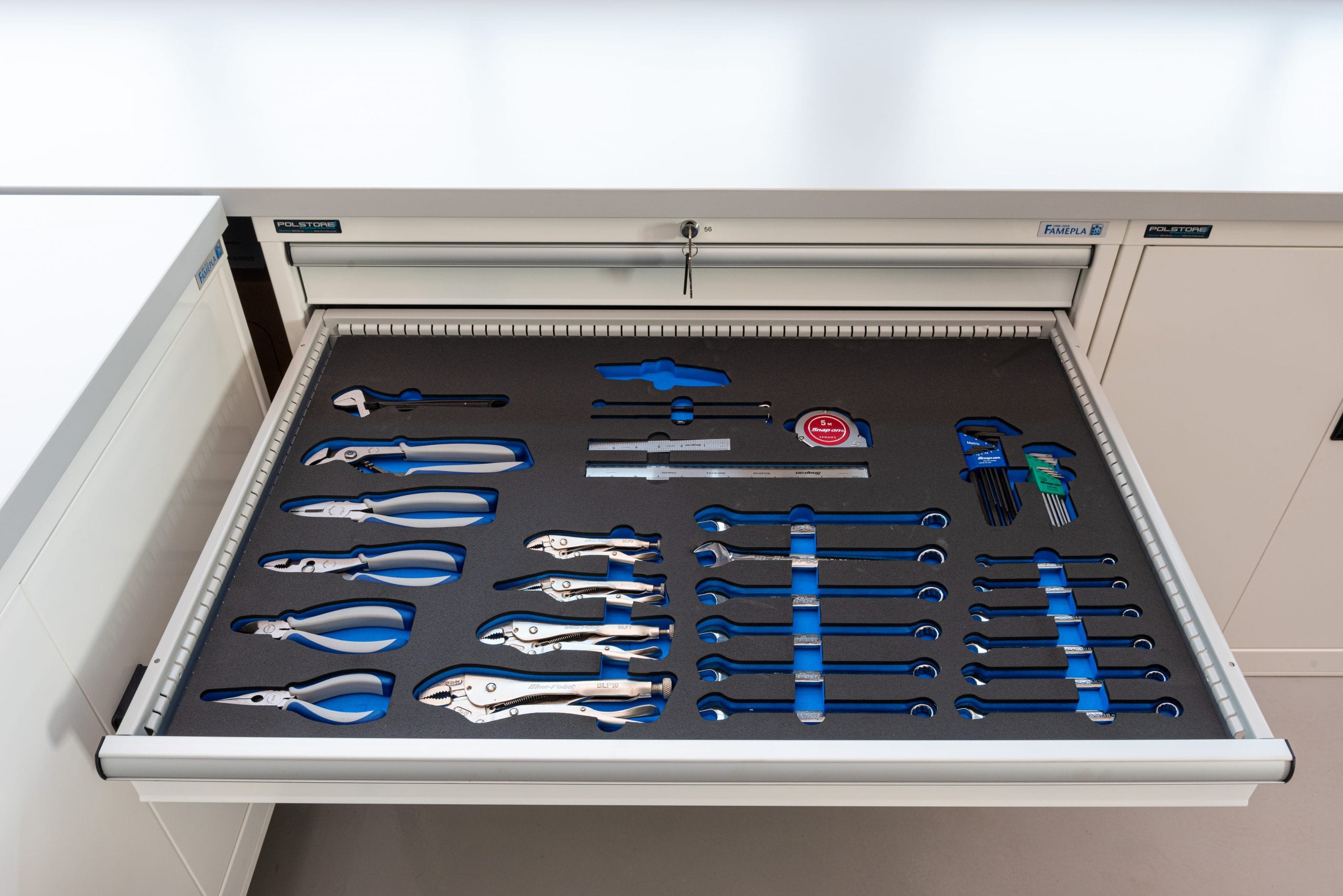
Extreme examples of solutions to this in professional contexts are shadow boards and shadow foam cutouts. Here, the users create a very clear visual correspondence between what an object is and where it belongs when not in use. I don’t expect the solution to my problem will involved drawing lines on walls or furniture, or creating foam cutouts, but there might be a hint of a solution in this.

Part of Marie Kondo’s advice is to “get rid of anything that doesn’t spark joy” (paraphrasing).
If I were to follow this advice, it might be the case that I will get rid of a lot of things that would be a waste of time and attention keeping and giving a home. I would also potentially better remember the things that I choose to keep, because I am keeping them based on a standard relating to my psychological attachment to them.
Practicing remembering the homes of everything requires that I have something external to refer to, to correct mistakes when I make them. So this doesn’t actually defeat the potential need for a list or something of the sort.
I have a poor memory relating to keeping track of what things I own, and it won’t help if I also have to remember where everything lives.
Should I write down a list of all permanent items and their homes? Ideally I wouldn’t need to do that.
This is useful for fungible or semi-fungible items, or items that are easily categorised, but not helpful for unique items.
Never put them anywhere else.
I believe this will be a key thing for me to automatise. Many of my things live in sort of ‘interim homes’ on the way to some not-yet-defined permanent home—which they never seem to make it to, of course.
My personal spaces are fairly bland and oddly proportioned. They are not aesthetic at all, even when maximally tidy. Aligning my living spaces with my aesthetic preferences may increase my baseline motivation to keep them tidy.
That doesn’t mean it can’t be part of the solution.
Idea: Keep a document tracking open threads, updating it every night. Every morning, feed it to Gemini Flash and have it coach me on what I could work towards resolving today.
Closing threads is a common problem in my life. I should look for ways to increase my propensity to resolve/finish things I start.
Methods I look for need to allow for the fact that not everything needs to be resolved, i.e. that having some open threads is inevitable, and that some of those threads are acceptable to leave open indefinitely.
As I think about this, I notice that—once I solve a given problem with a new idea—I have no habit to consciously acknowledge that a problem has been solved, much less to write down that it has been solved. The ex-problem fades from my mind as I set my mind on a new problem.
I could try to make it a habit to explicitly acknowledge when I do find solutions to problems. If the solution is found on Veritula, it would be natural to acknowledge it here too.
I like the idea of explicitly acknowledging progress in this way, because it might help me become more prideful in the Objectivist sense.
Would you like to try formulating an explicit methodology for how you want to use Veritula?
This seems like a good idea.
Similarity is fine if it is less narrow, but ‘thread’ doesn’t seem any less narrow than ‘discussion’ to me. A ‘thread’ usually means a reply chain.
I can’t decide if this communicates a grouping of ideas. Seems borderline.
“Go check out the Karl Popper context on Veritula” would only make sense if you are already a Veritula user who is accustomed to using this terminology.
I have an inexplicit criticism of this relating to “school subject”.
This actually seems anti-discussion. Sounds like a grouping of ideas that are only related by conceptual proximity, rather than building on each other.