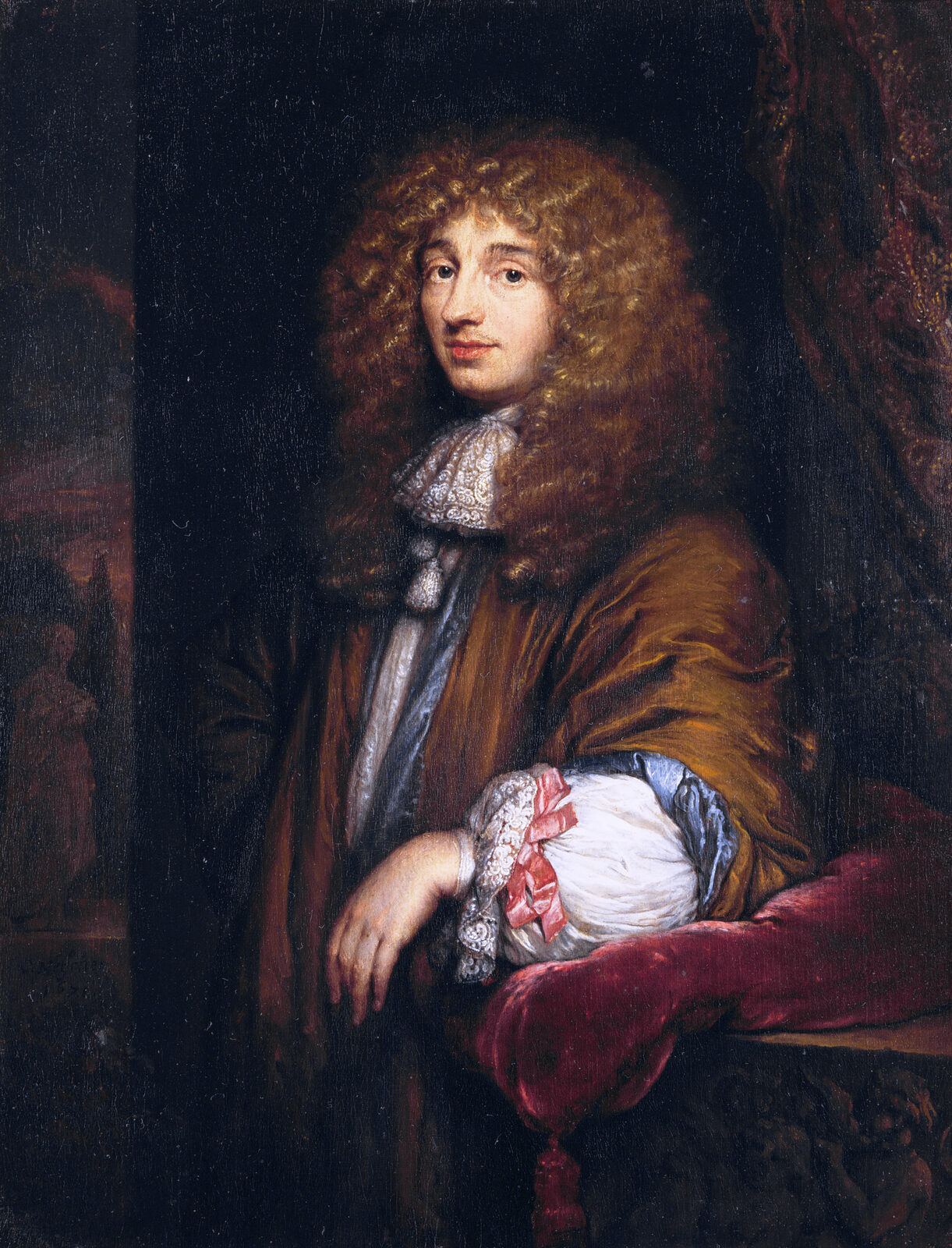
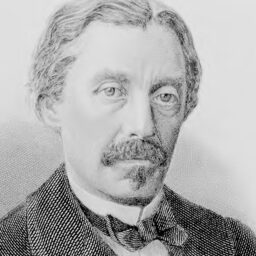
Christiaan HuygensPainting by Caspar Netscher, 1671
What is light? The Dutch mathematician and physicist Christiaan Huygens publishes his Treatise on Light, written twelve years earlier in Paris. Light, he argues, is a wave: a disturbance passed along through an invisible medium, the ether, spreading out in ever-widening spheres, the way sound spreads through air. Every point the wave reaches sends out little waves of its own, and together they make the next wavefront. From this, Huygens explains why light bends as it enters glass or water: it slows down there, so the wavefront turns, like a line of marchers stepping from pavement into mud. He even explains why a strange crystal from Iceland shows everything seen through it twice.
Light is a wave: a disturbance spreading through an invisible medium, the ether, as sound spreads through air. It travels more slowly in glass and water than in air, which is why its path bends as it enters them.
The state of the discussion
At this point, Huygens’s waves of light have no pending criticisms, so they’re rationally adoptable.
Use arrow keys ←→, the Previous and Next buttons above, or the timeline below to move through the history.Swipe left or right, or use the Previous and Next buttons above or the timeline below, to move through the history.
Source: Huygens, Traité de la lumière (Leiden, 1690)
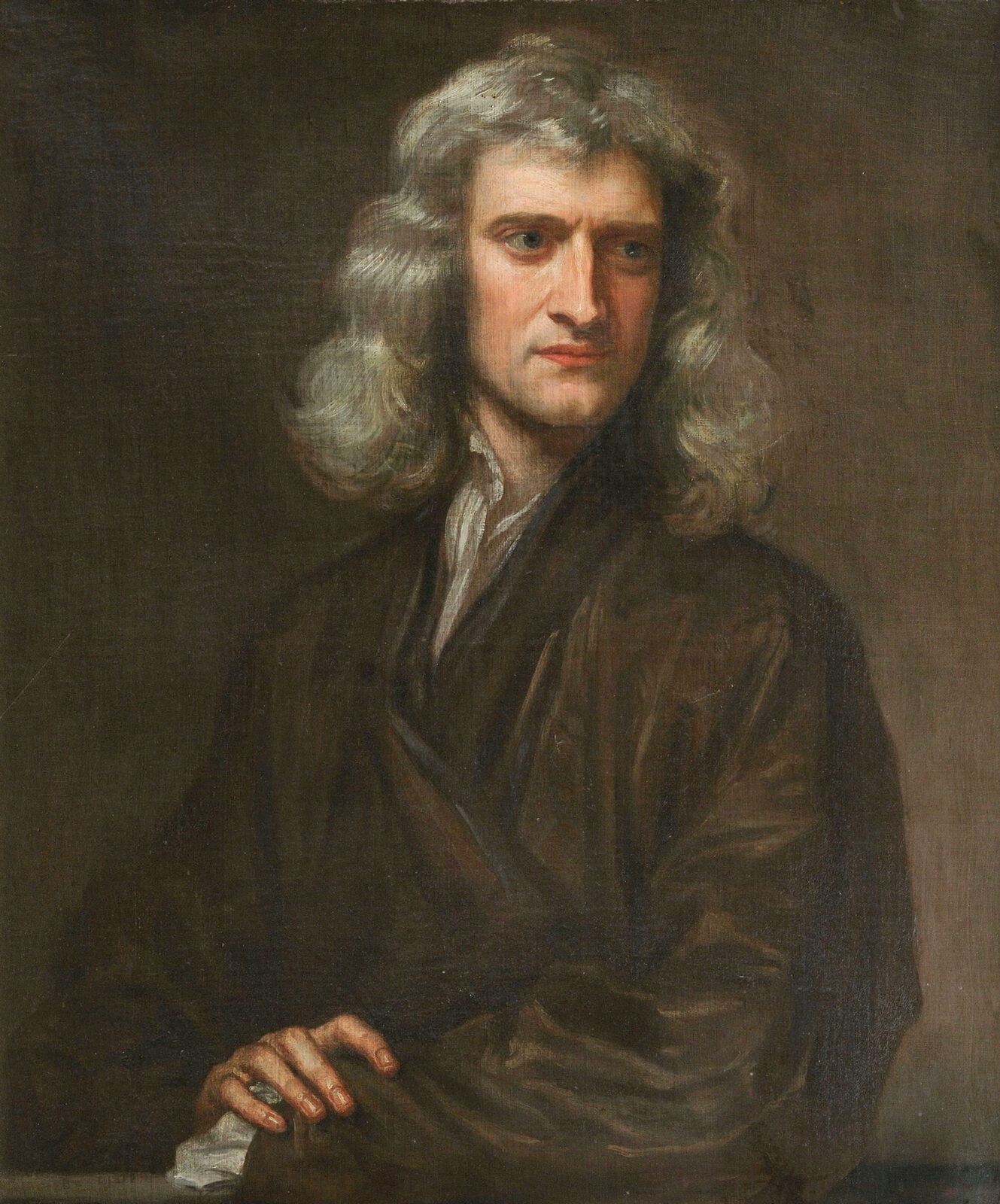
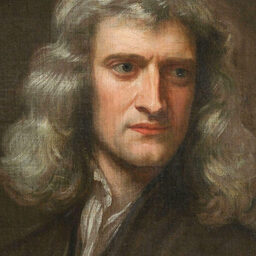
The most famous scientist alive disagrees. In the Latin edition of his Opticks, the English physicist and mathematician Isaac Newton adds questions at the end, phrased as doubts but meant as arguments. “Are not the Rays of Light very small Bodies emitted from shining Substances?” he asks, as the English editions that follow put it. Particles fly in straight lines, which would explain why light casts sharp shadows. A wave, Newton points out, would bend around an obstacle into its shadow, just as we hear sounds around a corner. As for the bending of light at the surface of glass, he puts it down to the glass pulling the particles in, which would make them speed up inside it. For the next hundred years, most physicists side with him.
Light is a stream of tiny particles thrown off by shining things. They fly in straight lines, which is why shadows are sharp. Glass and water pull them in as they enter, which bends their path and speeds them up.
A wave would bend around an obstacle and spread into its shadow, as sound bends around a corner. But light casts sharp shadows.
The state of the discussion
Huygens’s waves of light now have one pending criticism, so they aren’t rationally adoptable anymore. Newton’s particles of light have none, so they’re rationally adoptable.
Use arrow keys ←→, the Previous and Next buttons above, or the timeline below to move through the history.Swipe left or right, or use the Previous and Next buttons above or the timeline below, to move through the history.
Source: Newton, Optice (London, 1706), queries 20–21, which became queries 28–29 in Opticks, 2nd edition (London, 1717)
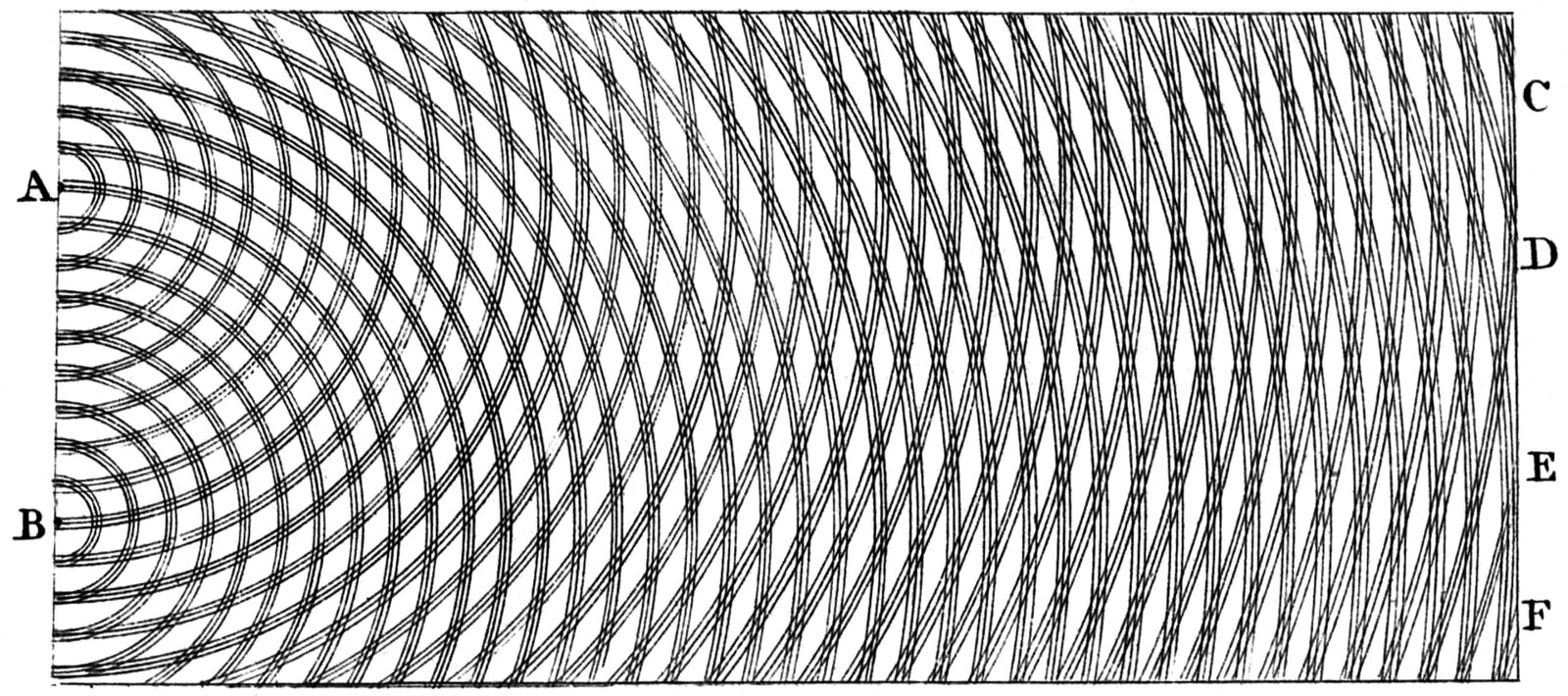
Waves spreading from two openings, A and B, as Thomas Young drew themThomas Young, A Course of Lectures on Natural Philosophy (London, 1807)
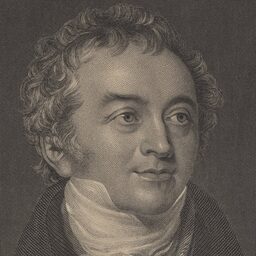
Two beams of light can cancel each other out. The English physician and physicist Thomas Young holds a slip of card, a thirtieth of an inch wide, in a narrow beam of sunlight. Light passes on both sides of it, and in its shadow appear stripes, bright and dark. Block the light on one side of the card, and the stripes vanish. Young explains them as waves: where the crests from the two sides meet, they add up, and where a crest meets a trough, they cancel. Light’s waves must be tiny: those of red light are less than a thousandth of a millimeter long.
He presents this finding to the Royal Society on November 24. The critic Henry Brougham, writing anonymously in the Edinburgh Review, has already called an earlier paper of Young’s “destitute of every species of merit.”
Drag the slider to change the light’s wavelength. Waves spreading from two narrow openings meet on a screen, where they add up into bright bands and cancel into dark ones. Redder light, with longer waves, spreads the bands farther apart. Cover one opening, and the bands disappear. Young’s card worked the same way, with light passing on either side of it.
Light added to light can make darkness. Hold a thin card in a narrow beam of light, and bright and dark stripes appear in its shadow; block the light passing one side of it, and they vanish. Waves can cancel each other out. Streams of particles can’t.
The state of the discussion
Newton’s particles of light now have a pending criticism too, so neither they nor Huygens’s waves of light are rationally adoptable.
Use arrow keys ←→, the Previous and Next buttons above, or the timeline below to move through the history.Swipe left or right, or use the Previous and Next buttons above or the timeline below, to move through the history.
Sources:
Young, “Experiments and Calculations Relative to Physical Optics”, Philosophical Transactions 94 (1804), 1–16
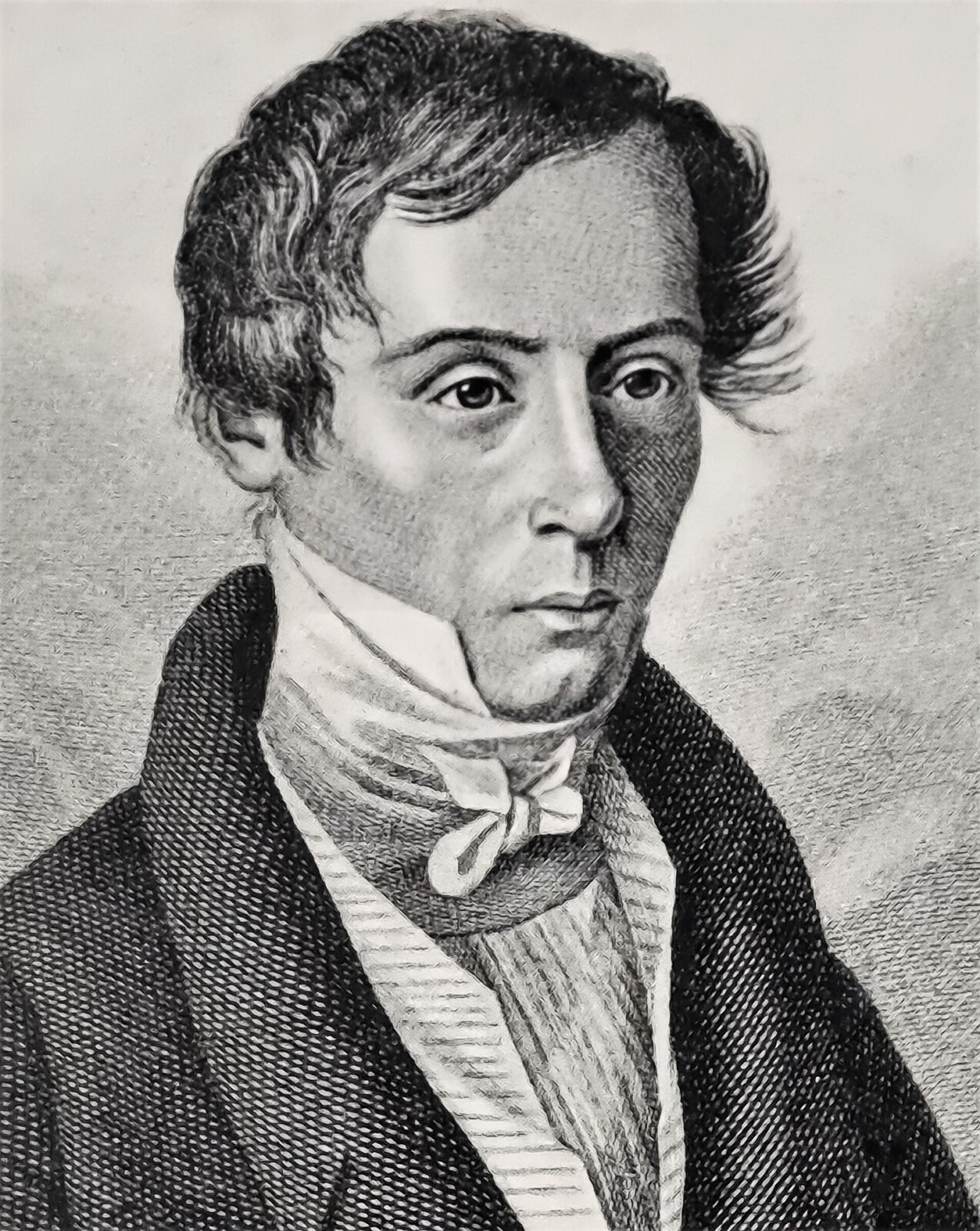
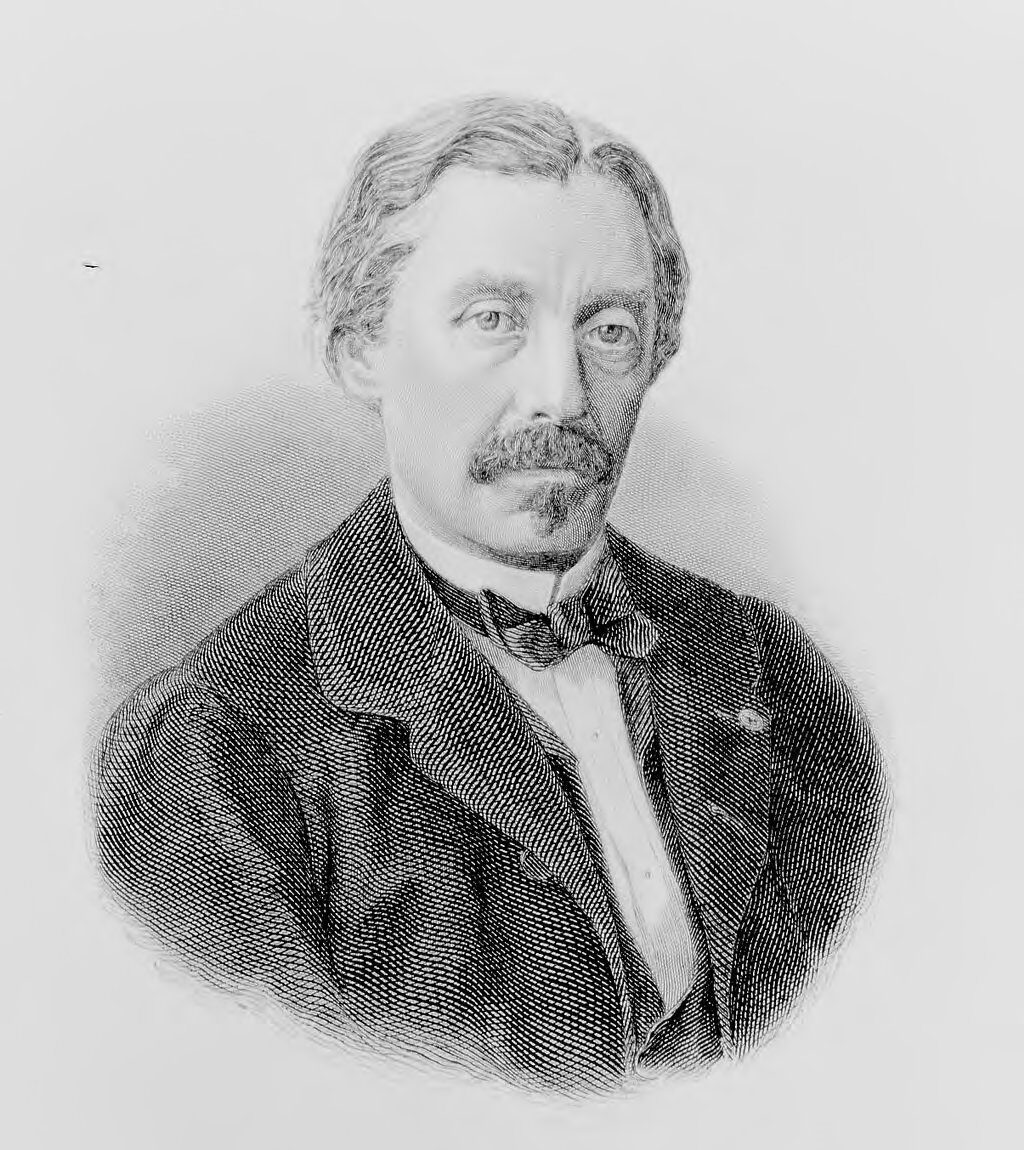
A prediction meant to sink the wave theory saves it instead. The French Academy of Sciences offers a prize for the best account of how light bends around obstacles. The French engineer and physicist Augustin Fresnel, who builds roads for a living, enters a wave theory worked out in exact mathematics. Light’s waves are so short, he finds, that they bend only slightly into shadows, making the fine fringes seen along their edges.
Most of the judges favor particles. One of them, the French mathematician and physicist Siméon Denis Poisson, works out a consequence of Fresnel’s mathematics that seems absurd: in the shadow of a small round disk, there should be a bright spot, right at the center. Another judge, the French astronomer and physicist François Arago, tries it. The spot is there. Fresnel wins the prize on March 15. Two astronomers had seen the spot a century earlier, but nobody remembered.
Drag the slider to move the screen. Light bending around the disk’s edge from all sides travels the same distance to the center of its shadow, so the waves arrive in step there and make a bright spot, as bright as without the disk. Particles would leave the shadow dark. The farther the screen, the wider the spot.
Counter-criticism of #5820 by Augustin Fresnel·#5822
Light does bend into shadows, only very slightly, because its waves are so short. That makes the fine fringes along the edge of a shadow, and my calculation of the waves predicts exactly where they fall.
Counter-criticism of #5822 by Siméon Denis Poisson·#5823
By Fresnel’s own calculation, the shadow of a small round disk would have a bright spot right at its center, as bright as if the disk weren’t there. That’s absurd.
Counter-criticism of #5823 by François Arago·#5824
I put a small round disk in a narrow beam of light, and the bright spot is there, at the center of its shadow, just as Fresnel’s theory says.
The state of the discussion
Arago answers Poisson, so Fresnel’s answer to Newton stands, and Huygens’s waves of light have no pending criticisms left: they’re rationally adoptable again. Newton’s particles of light still have one.
Use arrow keys ←→, the Previous and Next buttons above, or the timeline below to move through the history.Swipe left or right, or use the Previous and Next buttons above or the timeline below, to move through the history.
Sources:
Fresnel, “Mémoire sur la diffraction de la lumière”, Mémoires de l’Académie royale des sciences 5 (1826), 339–475
Arago’s report in Annales de chimie et de physique 11 (1819)
Léon FoucaultEngraving, about 1860 · Recueil des travaux scientifiques de Léon Foucault (1878)
A race settles a question as old as the two theories. Newton’s particles should speed up inside water, Huygens’s waves should slow down. Arago proposed the test in 1838: send light through air and through water, and see which arrives first. Light is far too fast to time with a clock, but the French physicist Léon Foucault uses a mirror spinning hundreds of times a second. In the moment light takes to travel to a distant mirror and back, the spinning mirror turns a little, so the returning beam lands slightly off. Through a tube of water, it lands farther off: light took longer. Foucault reports it on May 6, six weeks ahead of the French physicist Hippolyte Fizeau, who finds the same.
Time slowed down enormously. A flash goes from the spinning mirror to two fixed mirrors and back, once through air and once through water. Meanwhile the mirror turns away from where it stood when the flash went out, the dashed line beside it, so the light comes back to one side. The light through water lands farther off, so it took longer.
Light travels more slowly through water than through air: measured with a spinning mirror, the light that went through water comes back later. Newton’s particles, pulled into the water, would travel faster there.
The state of the discussion
Newton’s particles of light now have two pending criticisms. Huygens’s waves of light are still rationally adoptable.
Use arrow keys ←→, the Previous and Next buttons above, or the timeline below to move through the history.Swipe left or right, or use the Previous and Next buttons above or the timeline below, to move through the history.
Source: Foucault, “Méthode générale pour mesurer la vitesse de la lumière dans l’air et les milieux transparents”, Comptes rendus de l’Académie des sciences 30 (1850), 551–560
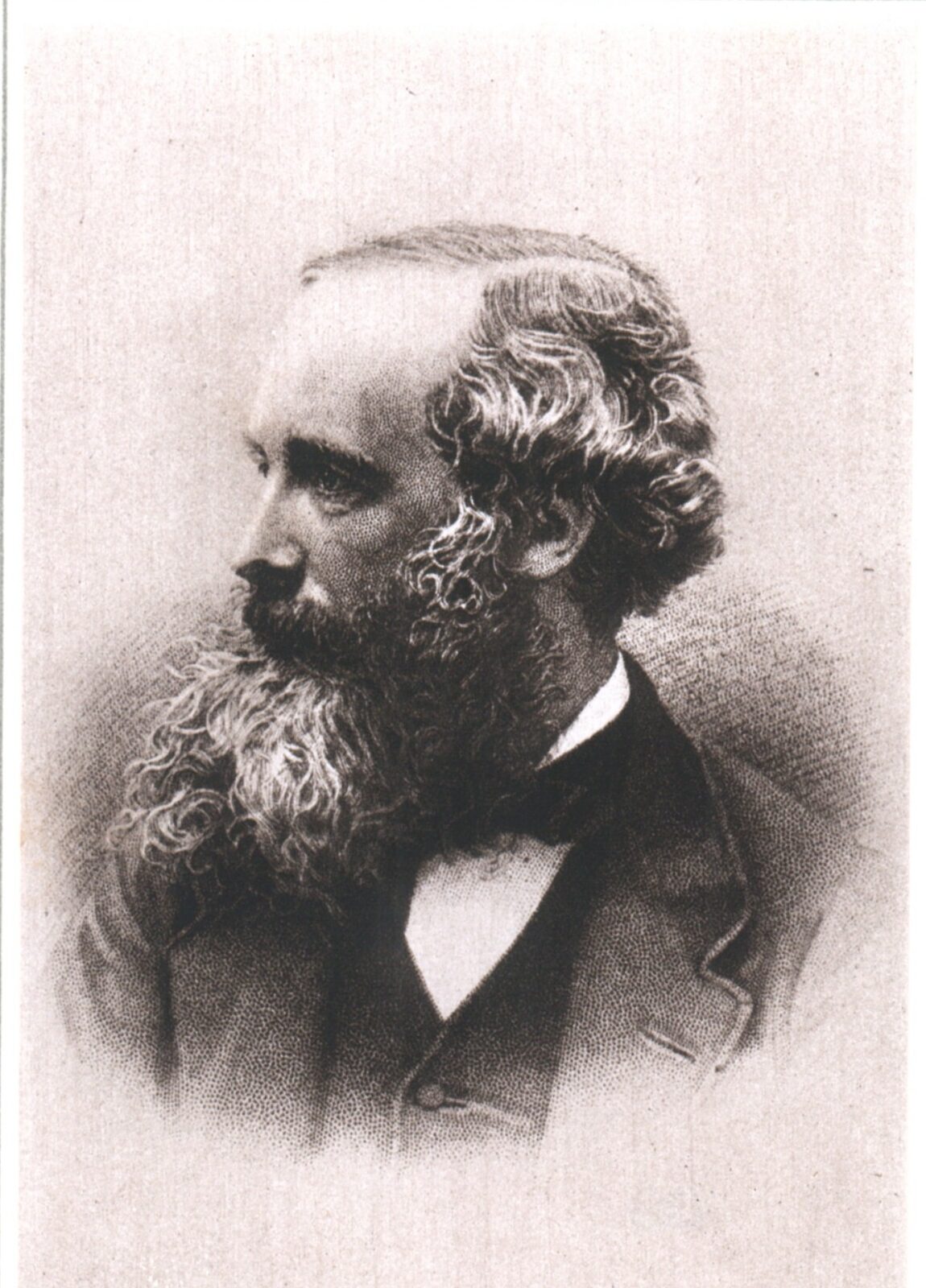
James Clerk MaxwellEngraving by Stodart after a photograph by Fergus
One theory explains light, electricity, and magnetism together. The Scottish physicist James Clerk Maxwell writes down equations for electric and magnetic forces, building on the English scientist Michael Faraday’s experiments. They predict waves of electric and magnetic force rippling through space, and they say how fast: about 310,000 kilometers a second, close to the speeds measured for light. So light, Maxwell concludes, is “an electromagnetic disturbance in the form of waves.” Huygens’s waves are waves of something after all.
Twenty-three years later, the German physicist Heinrich Hertz makes such waves with sparks in his laboratory – waves far too long to see. Today we call them radio waves.
Light is a wave of electric and magnetic forces, traveling through space at the speed my equations give for such waves, about 310,000 kilometers a second. Radiant heat, and any other radiation like it, must be such a wave too.
The state of the discussion
Maxwell revises Huygens’s waves, and Maxwell’s electromagnetic waves have no pending criticisms, so they’re rationally adoptable. Newton’s particles of light still have two.
Use arrow keys ←→, the Previous and Next buttons above, or the timeline below to move through the history.Swipe left or right, or use the Previous and Next buttons above or the timeline below, to move through the history.
Sources:
Maxwell, “A Dynamical Theory of the Electromagnetic Field”, Philosophical Transactions 155 (1865), 459–512
Hertz, “Über Strahlen elektrischer Kraft”, Sitzungsberichte der Königlich Preussischen Akademie der Wissenschaften zu Berlin (1888), 1297–1307
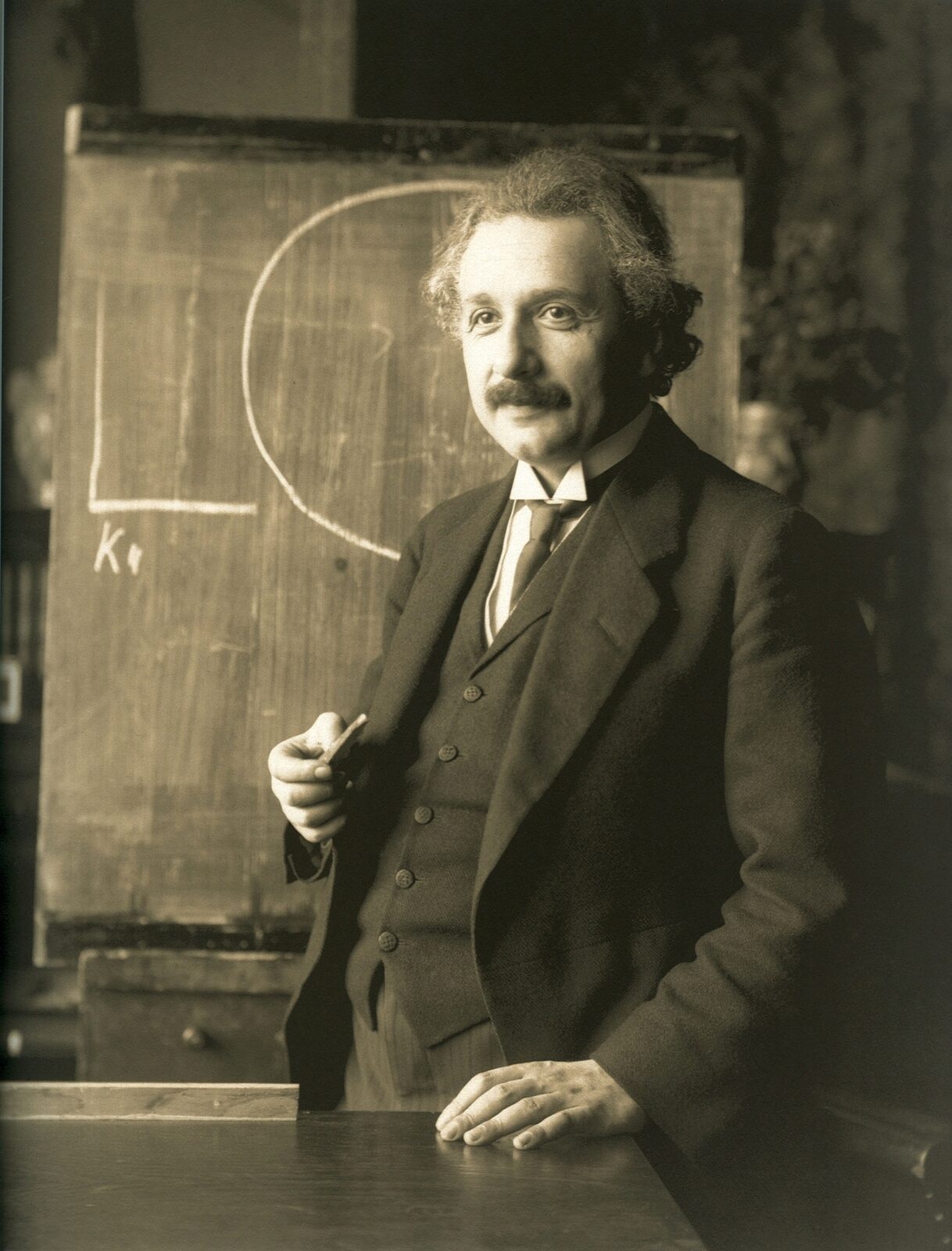
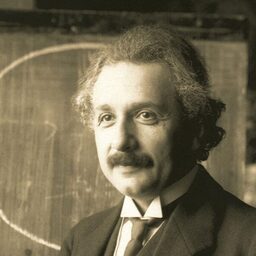
Albert EinsteinPhotograph by Ferdinand Schmutzer, 1921
Waves can’t explain everything light does. Light shining on a metal knocks electrons out of it, which physicists call the photoelectric effect, and the Hungarian-born German physicist Philipp Lenard found that brighter light knocks out more of them, but not faster ones. A brighter wave carries more energy, so why don’t the electrons fly off faster?
Five years earlier, the German physicist Max Planck explained the light hot objects give off by assuming that matter gives off and takes up energy only in packets, though he took that to be a feature of matter, not of light. In a paper he calls “very revolutionary,” the German-born physicist Albert Einstein, who works at the patent office in Bern, proposes that light itself comes in such packets, quanta, each with an energy set by the light’s color: the bluer the light, the more energy each quantum carries. An electron that takes up a quantum gets all its energy at once, so it flies off faster for bluer light, and brighter light only means more quanta. He predicts exactly how fast, for every color. For years, hardly any physicist accepts it. When Einstein receives the Nobel Prize for 1921, it’s for his law of the photoelectric effect, and the prize says nothing about the quanta behind it.
Drag the slider to change the light’s wavelength, and make the light brighter with the button. Only light that’s blue enough frees electrons from this metal, and the bluer it is, the faster they fly. Brighter light frees more of them, no faster.
Light’s energy comes in packets, quanta, each with an energy proportional to the light’s frequency, so bluer light has more energetic quanta. Each quantum is taken up whole, by one electron.
Lenard found that brighter light knocks more electrons out of a metal, but not faster ones. A spreading wave would shake the electrons harder the brighter it is, and send them out faster.
The state of the discussion
Maxwell’s electromagnetic waves now have a pending criticism, so they aren’t rationally adoptable anymore. Einstein’s light quanta have none, so they’re rationally adoptable. Newton’s particles of light still have two pending criticisms.
Use arrow keys ←→, the Previous and Next buttons above, or the timeline below to move through the history.Swipe left or right, or use the Previous and Next buttons above or the timeline below, to move through the history.
Sources:
Einstein, “Über einen die Erzeugung und Verwandlung des Lichtes betreffenden heuristischen Gesichtspunkt”, Annalen der Physik 17 (1905), 132–148
Lenard, “Ueber die lichtelektrische Wirkung”, Annalen der Physik 8 (1902), 149–198
Planck, “Zur Theorie des Gesetzes der Energieverteilung im Normalspectrum”, Verhandlungen der Deutschen Physikalischen Gesellschaft 2 (1900), 237–245
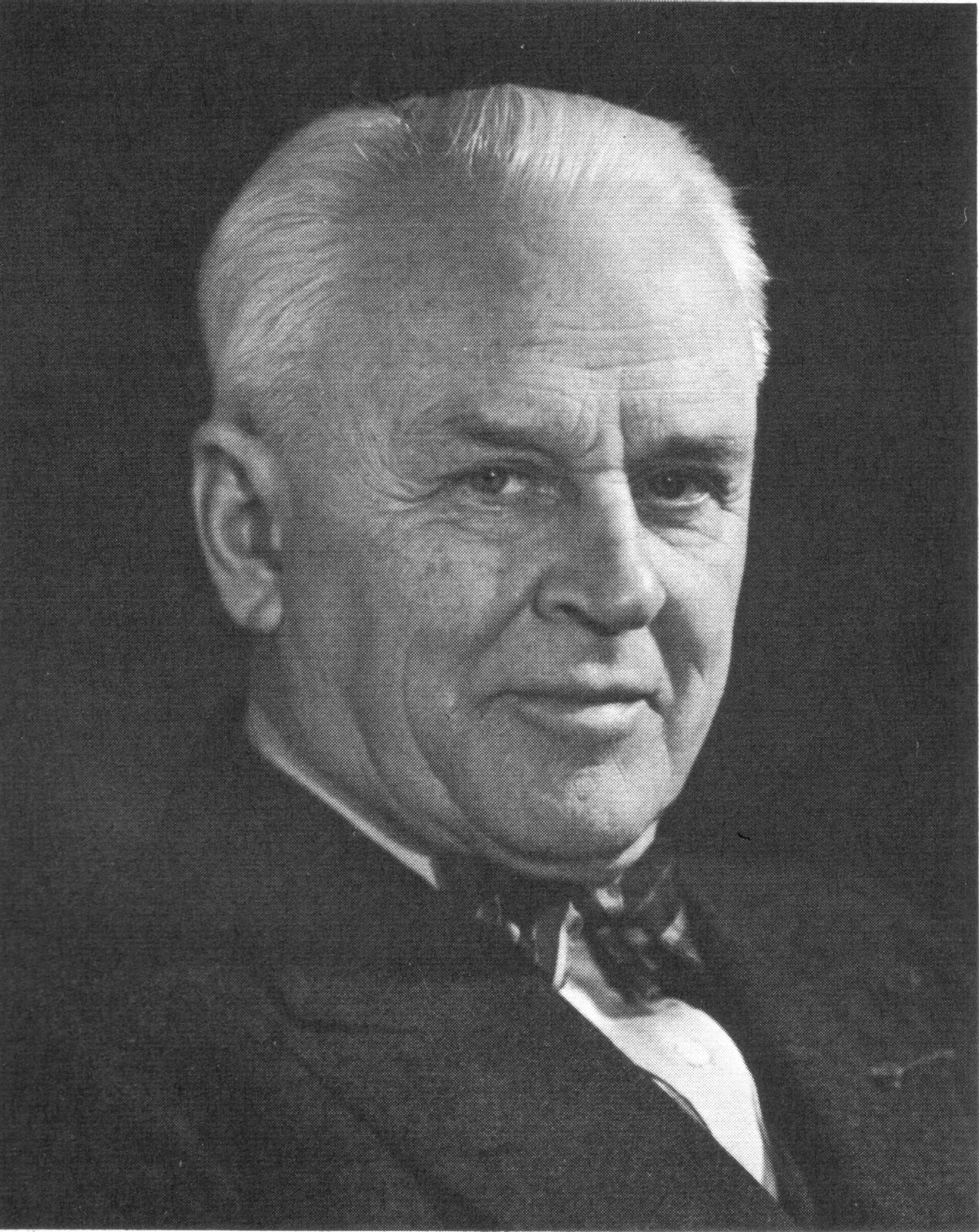
Einstein’s equation passes a hard test, and still isn’t believed. The American physicist Robert Millikan, who doesn’t believe in quanta, spends years measuring the electrons that light knocks out of metals, cutting the metals’ surfaces clean inside a vacuum. Einstein’s equation holds for every color he tries, and from it he measures Planck’s constant, the number that sets each quantum’s energy, with a precision of about half a percent. Yet Millikan still can’t accept quanta. Light interferes, as Young showed, and bends into shadows, as Fresnel showed. How could lumps of energy do that? Einstein’s equation, he writes, can’t yet be seen as resting on “any sort of a satisfactory theoretical foundation.”
Einstein’s equation fits my measurements of light knocking electrons out of metals, for every color I tried. But quanta can’t explain how light interferes and bends into shadows, which waves explain so well. The equation still lacks a sound theory.
The state of the discussion
Einstein’s light quanta now have a pending criticism too, so they aren’t rationally adoptable anymore, though they passed Millikan’s test. Nor are Maxwell’s electromagnetic waves or Newton’s particles of light. For now, no theory of light is rationally adoptable.
Use arrow keys ←→, the Previous and Next buttons above, or the timeline below to move through the history.Swipe left or right, or use the Previous and Next buttons above or the timeline below, to move through the history.
Sources:
Millikan, “A Direct Photoelectric Determination of Planck’s ‘h’”, Physical Review 7 (1916), 355–388
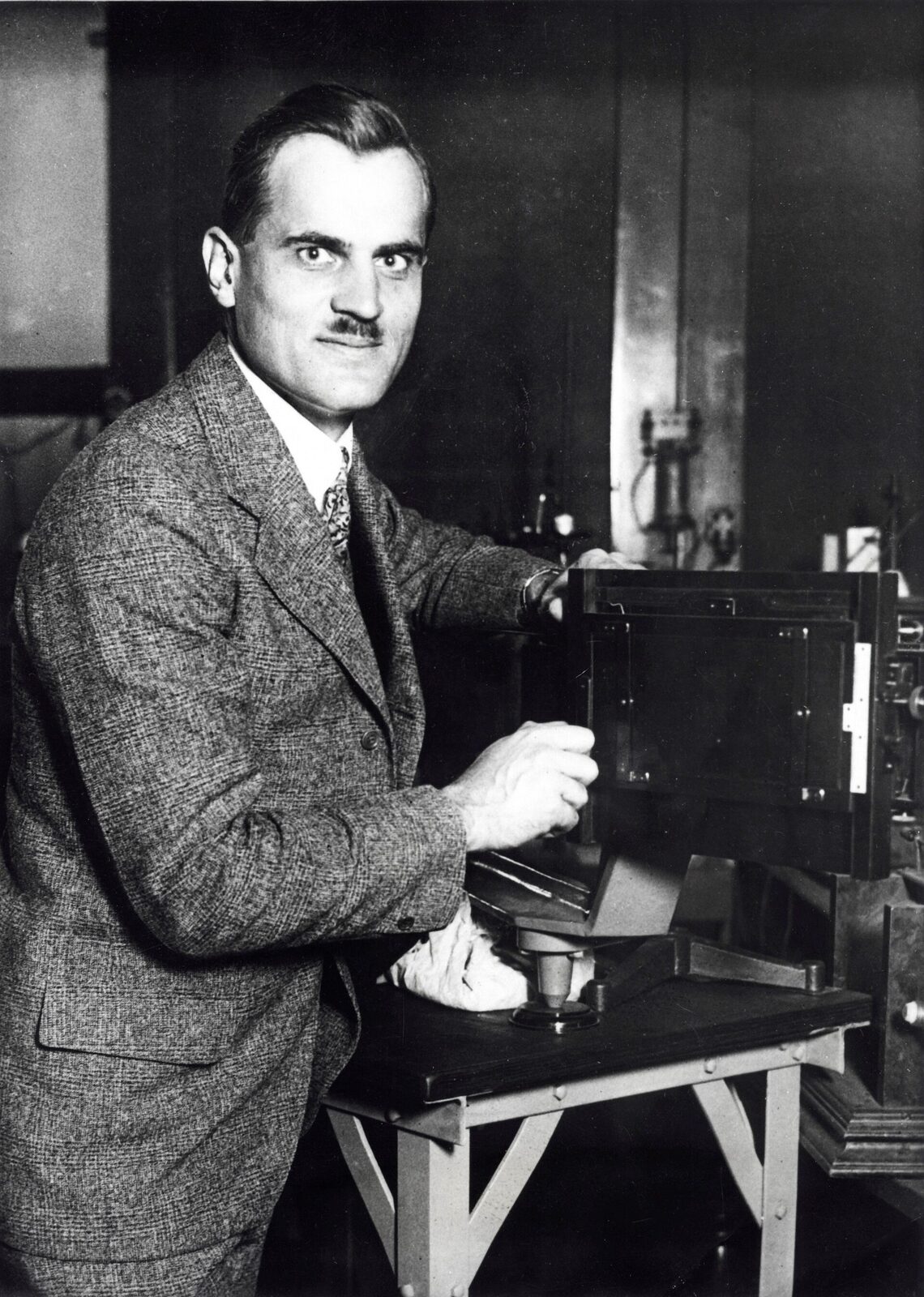
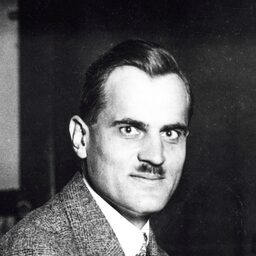
Light can collide. The American physicist Arthur Compton shines X-rays, a kind of light with very short waves, at a block of carbon, and measures the X-rays that bounce off. They come back with longer waves than they went in with, and the more sharply they’re deflected, the longer. A wave of light shaking an electron would send out waves just as long as its own. But Compton can explain the shift exactly: each quantum hits a single electron, like one billiard ball hitting another, and loses some of its energy, which lengthens its wave. Light’s quanta carry not just energy but momentum, a push. In 1926, the American chemist Gilbert Lewis gives them the name we still use: photons.
Drag the slider to deflect the X-ray more or less sharply. It bounces off with a longer wave than it went in with, shown faintly beside it, and the electron flies off with the push the X-ray lost. The drawing makes the lengthening much larger than it is; the numbers are Compton’s.
X-rays bounced off electrons come back with longer waves, the longer the more sharply they’re deflected. A wave would come back with its wavelength unchanged. The shift is just what it should be if each quantum collides with a single electron, like one billiard ball with another.
The state of the discussion
Maxwell’s electromagnetic waves now have two pending criticisms. Einstein’s light quanta still have one, and Newton’s particles of light two. Still, no theory of light is rationally adoptable.
Use arrow keys ←→, the Previous and Next buttons above, or the timeline below to move through the history.Swipe left or right, or use the Previous and Next buttons above or the timeline below, to move through the history.
Sources:
Compton, “A Quantum Theory of the Scattering of X-rays by Light Elements”, Physical Review 21 (1923), 483–502
Lewis, “The Conservation of Photons”, Nature 118 (1926), 874–875
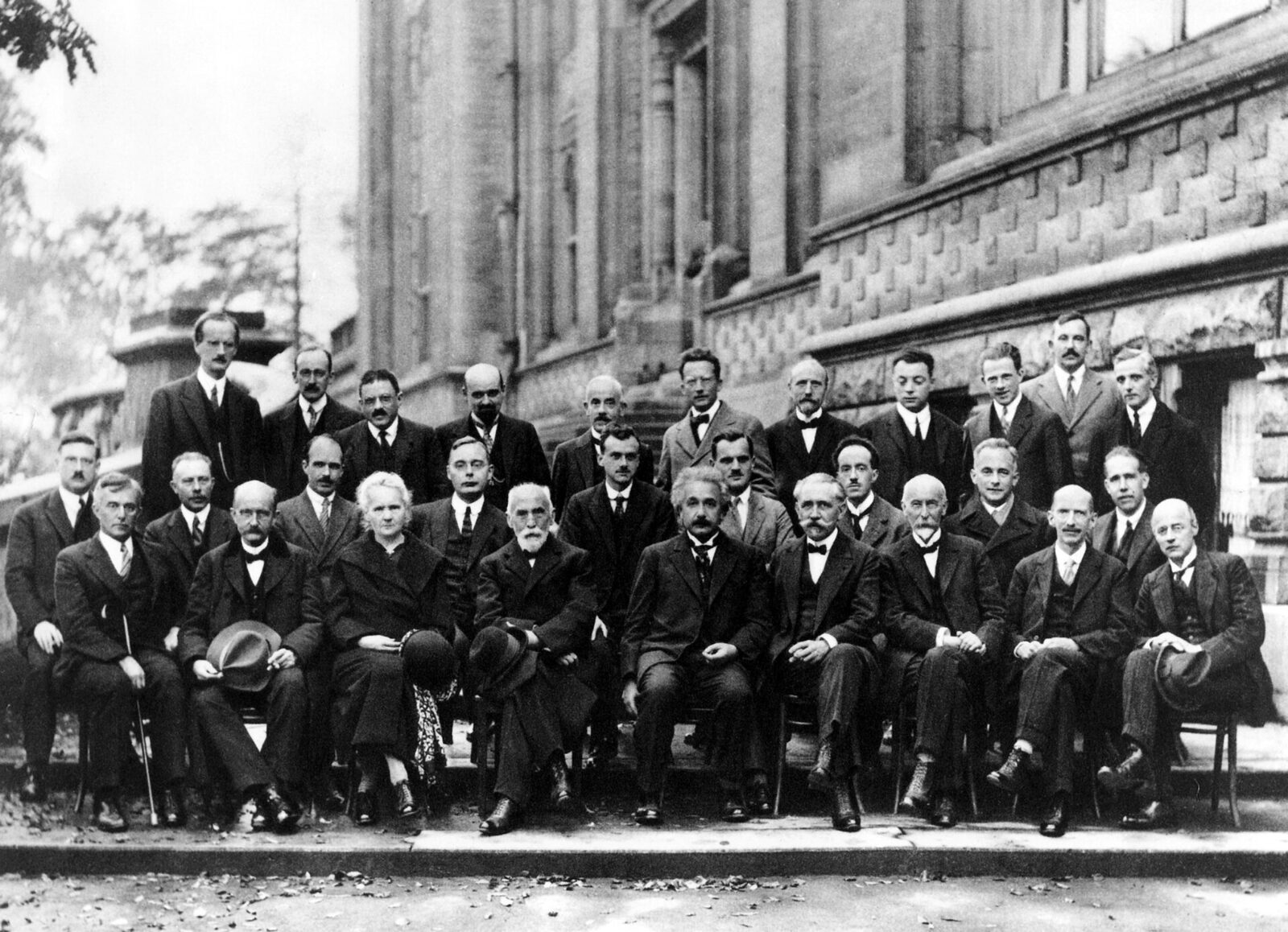
The Solvay Conference on electrons and photons, Brussels, October 1927, with Dirac, Compton, and Einstein among othersPhotograph by Benjamin Couprie
So is light a wave or a stream of particles? The English theoretical physicist Paul Dirac, working in Copenhagen, applies the new quantum mechanics to light itself. In his theory, light is a quantum field. Its energy comes in photons, each taken up whole, in one place, as Einstein said. But the chance of finding a photon here or there spreads and interferes like a wave, so light still makes Young’s stripes and Fresnel’s bright spot.
Each photon, as Dirac puts it in his textbook three years later, “interferes only with itself.” Physics, he writes there, needn’t say what a photon does on its way, only predict where it will land. Refined over the next two decades into quantum electrodynamics, his theory becomes one of the most precisely tested in all of physics.
Light is a quantum field. Its energy comes in quanta, photons, each taken up whole at one place. But the chance of finding a photon here or there spreads and interferes like a wave: each photon interferes only with itself. So light makes interference stripes and knocks out electrons alike.
The state of the discussion
Dirac revises Einstein’s light quanta, and Dirac’s quantum theory of light has no pending criticisms, so it’s rationally adoptable. Maxwell’s electromagnetic waves and Newton’s particles of light each still have two.
Use arrow keys ←→, the Previous and Next buttons above, or the timeline below to move through the history.Swipe left or right, or use the Previous and Next buttons above or the timeline below, to move through the history.
Sources:
Dirac, “The Quantum Theory of the Emission and Absorption of Radiation”, Proceedings of the Royal Society A 114 (1927), 243–265
Dirac, The Principles of Quantum Mechanics (Oxford, 1930)
An abstract photograph of light streaking out in many directions, standing in for reality branchingPhotograph by Jr Korpa, “Die Längste Nacht” · Unsplash
The American physicist Hugh Everett, a graduate student at Princeton, asks what follows if quantum theory applies to everything, including the instruments and people observing an experiment. Its equations never make a photon end up in just one place. The textbooks add a rule for that: whenever someone observes an outcome, every possibility but one vanishes. Everett drops the rule. Then every outcome the equations allow happens. An observer who sees a photon land here and one who sees it land there are both real, in branches of reality that no longer affect each other.
Hardly anyone takes him seriously. When he visits the Danish physicist Niels Bohr in Copenhagen in 1959, the meeting goes nowhere. Everett, already working on defense research for the Pentagon, never works on physics again. In the 1970s, the American physicist Bryce DeWitt brings the theory back, calling it the many-worlds interpretation. Those many worlds are now called the multiverse. Everett dies in 1982, at 51.
Quantum theory applies to everything, observers included, and nothing ever collapses. An observer measuring something branches: each branch sees one definite outcome, and every outcome the equations allow is seen in some branch. All the branches are actual, none more real than the rest.
The state of the discussion
Everett’s many worlds, a revision of Dirac’s theory, face no pending criticisms, so they’re rationally adoptable. Maxwell’s electromagnetic waves and Newton’s particles of light still have two pending criticisms each.
Use arrow keys ←→, the Previous and Next buttons above, or the timeline below to move through the history.Swipe left or right, or use the Previous and Next buttons above or the timeline below, to move through the history.
Sources:
Everett, “‘Relative State’ Formulation of Quantum Mechanics”, Reviews of Modern Physics 29 (1957), 454–462
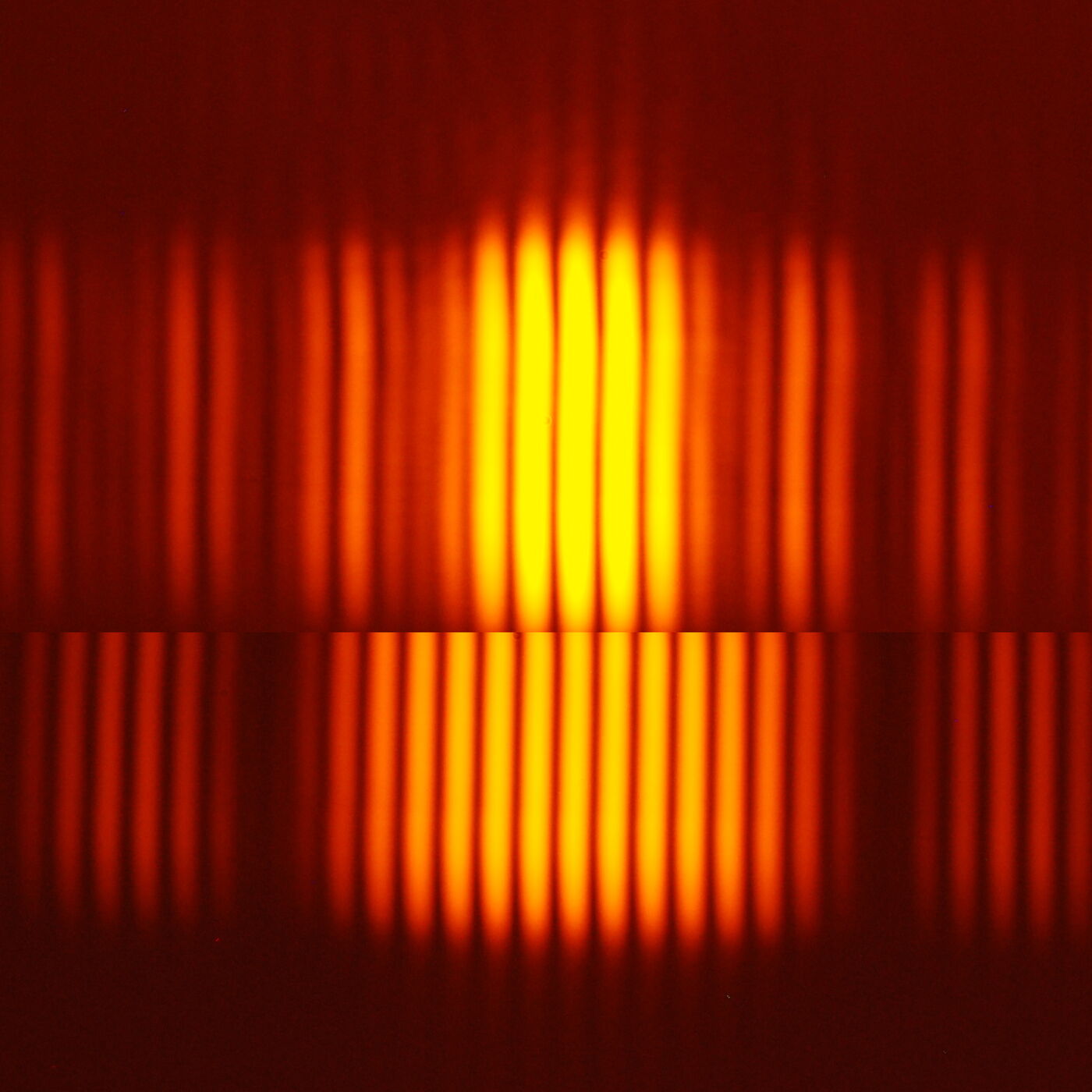
Sodium light through two double slits, one above the other, with slits of different widthsPhotograph by Pieter Kuiper, 2010
Back to the two slits of Young’s day, with one change: since Dirac’s, experiments have sent photons through them one at a time. Each lands as a single spot, yet after thousands, the spots build up Young’s stripes all the same. In his book The Fabric of Reality, British physicist David Deutsch, at Oxford, asks what that means.
Open two more slits, interleaved with the first two, and the stripes spread farther apart; some places that photons used to reach now get none at all. Something coming through the other slits must be stopping each photon from going there – something we can’t see, which shows up only in these interference patterns. Deutsch calls these “shadow photons,” and the ones we see “tangible photons.” For every photon we see, there must be at least a trillion we don’t see.
Photons sent one at a time each land as a single dot. Over time, the dots pile up and form stripes; each dot fades after a few seconds, so the screen shows only the latest photons. Open two more slits, and five stripes are reduced to three, with large gaps in between. Electrons and molecules do the same.
Photons aren’t special. Electrons sent one at a time build up the same stripes, as the Japanese physicist Akira Tonomura’s team shows in 1989, and in 2019, molecules of some 2,000 atoms interfere too. So every kind of particle has its shadow counterparts, and they act on each other as the ones we see do: they make up a huge number of universes like ours, which affect each other only weakly, through interference. Nor is any of them special: each photon is tangible in its own universe and a shadow in all the others. Reality is a multiverse, as Everett’s theory says.
Today, quantum theory has passed every test put to it, yet the multiverse is still a minority view among physicists. Many hold that the theory only predicts what we’ll observe. That leaves them Deutsch’s question: if not shadow photons, what keeps the photons from those places?
Reality is a multiverse, as Everett’s theory says, and single-particle interference shows it. Photons sent through slits one at a time stop reaching some places when more slits are open, so something coming through the other slits interferes with them: shadow photons, which are the photons of other universes. Every kind of particle has such counterparts, and they make up a huge number of universes like ours.
The state of the discussion
Deutsch’s multiverse builds on Everett’s many worlds and faces no pending criticisms, so the discussion stands on it today. Maxwell’s electromagnetic waves and Newton’s particles of light still have two pending criticisms each.
Use arrow keys ←→, the Previous and Next buttons above, or the timeline below to move through the history.Swipe left or right, or use the Previous and Next buttons above or the timeline below, to move through the history.
Sources:
Deutsch, The Fabric of Reality (London, 1997), chapter 2, “Shadows”
Tonomura et al., “Demonstration of Single-Electron Buildup of an Interference Pattern”, American Journal of Physics 57 (1989), 117–120
Fein et al., “Quantum Superposition of Molecules beyond 25 kDa”, Nature Physics 15 (2019), 1242–1245
Researched and written with the help of AI, from the sources named. AI can make mistakes. Veritula doesn’t claim perfect historical accuracy; the sources are there to check against.
Huygens said light is a wave, Newton that it’s a stream of particles. Both were wrong, and working out what light really is showed that our universe is one of many.
Discussions can branch out indefinitely. You may need to scroll sideways.
The discussion as it was in July 1957. Chronicle discussions are read-only. Jump to the present
Light is a wave of electric and magnetic forces, traveling through space at the speed my equations give for such waves, about 310,000 kilometers a second. Radiant heat, and any other radiation like it, must be such a wave too.
Lenard found that brighter light knocks more electrons out of a metal, but not faster ones. A spreading wave would shake the electrons harder the brighter it is, and send them out faster.
X-rays bounced off electrons come back with longer waves, the longer the more sharply they’re deflected. A wave would come back with its wavelength unchanged. The shift is just what it should be if each quantum collides with a single electron, like one billiard ball with another.
Light is a stream of tiny particles thrown off by shining things. They fly in straight lines, which is why shadows are sharp. Glass and water pull them in as they enter, which bends their path and speeds them up.
Light added to light can make darkness. Hold a thin card in a narrow beam of light, and bright and dark stripes appear in its shadow; block the light passing one side of it, and they vanish. Waves can cancel each other out. Streams of particles can’t.
Light travels more slowly through water than through air: measured with a spinning mirror, the light that went through water comes back later. Newton’s particles, pulled into the water, would travel faster there.
Quantum theory applies to everything, observers included, and nothing ever collapses. An observer measuring something branches: each branch sees one definite outcome, and every outcome the equations allow is seen in some branch. All the branches are actual, none more real than the rest.
No ideas yet.
Rationally adoptable.
Not rationally adoptable.
Older versions with pending criticisms.
New at this step.
Ideas are blue, criticisms red, comments small and gray.
Hover over ideas to expand them.
Click on ideas to jump to their place in the discussion.