Can One Machine Do It All?
Showing only ideas leading to #5888.
See chronicle·See most recent related ideas
The Analytical Engine can’t originate anything. It can do whatever we know how to order it to perform, and follow our reasoning, but it can’t anticipate any truths we haven’t worked out ourselves.
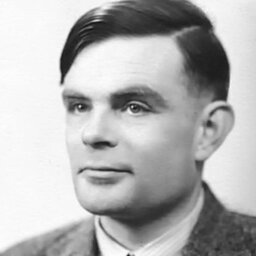
Machines will be able to think. The question “Can machines think?” is too meaningless to deserve discussion as it stands. Ask instead whether a machine can play the imitation game, passing for a person in typed conversation. In about fifty years, computers will play it so well that an average interrogator won’t have more than a 70 percent chance of telling them apart after five minutes of questioning, and one will be able to speak of machines thinking without expecting to be contradicted.
The argument from consciousness: a machine would have to feel, not just act. As the English neurosurgeon Geoffrey Jefferson put it in 1949: “Not until a machine can write a sonnet or compose a concerto because of thoughts and emotions felt, and not by the chance fall of symbols, could we agree that machine equals brain.”
Then the only way to be sure that a machine thinks is to be the machine, and the only way to know that a man thinks is to be that man. That’s solipsism. Instead of arguing over it, we have the polite convention that everyone thinks. And if a machine could defend its sonnet’s wording under questioning as well as a person can, I don’t think anyone would call that an easy contrivance.